In view of the high rate of insecurity bedeviling the nation, the former Inspector General of Police, Solomon Arase, has called for the enhancement of community policing in order to address the menace.
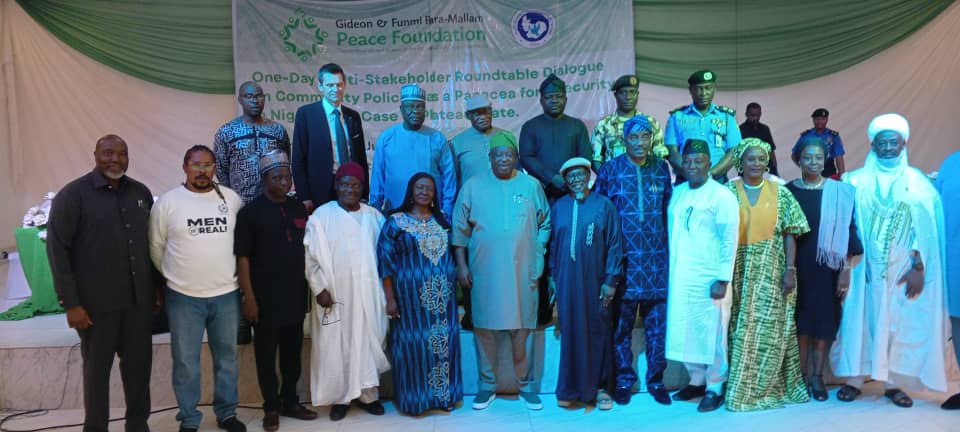
He spoke at a Multi-Stakeholder Roundtable Dialogue held in Jos, Plateau State capital, with the theme, ‘Community Policing as a Panacea for Insecurity in Nigeria: The Case of Plateau State’. The dialogue was convened by the Gideon and Funmi Para-Mallam Peace Foundation.
Arase who is also the Chairman of the Police Service Commission, stressed that community policing will fitly tackle the many security challenges because the system is grassroots oriented, adaptable and will enhance early-warning system.
According to him, Nigerians clamouring for state police should rather push for the strengthening of community policing because it will be more effective.
“Community policing is not just a strategy; it’s a philosophy that encourages citizen involvement in their own security. While the calls for state police are understandable, we must first maximize the structures we already have,” he said.
However, Plateau State Governor, Caleb Mutfwang, in his own remarks made case for the creation of State Police, saying Nigeria’s centralized police force is overstretched and too far removed from the realities on the ground.
Mutfwang noted that since the two years as a Governor, he has come to the firm conclusion that the Nigerian Police Force is too large and too centralized to function optimally from Abuja, and that the time has come to seriously consider state policing as a viable solution.
The governor added that his administration is determined to address the religious and ethnic barriers that have for long stifled unity and development in the state.
In his earlier address, the President of the Gideon and Funmi Para-Mallam Peace Foundation, Rev. Gideon Para-Mallam, said Plateau State has suffered deeply from violent conflict over the years, and that there is need for sincere, inclusive dialogue to restore normalcy.
The roundtable therefore, he said, is a platform for healing, collaboration, and progress.