By Hon Usman Bawa
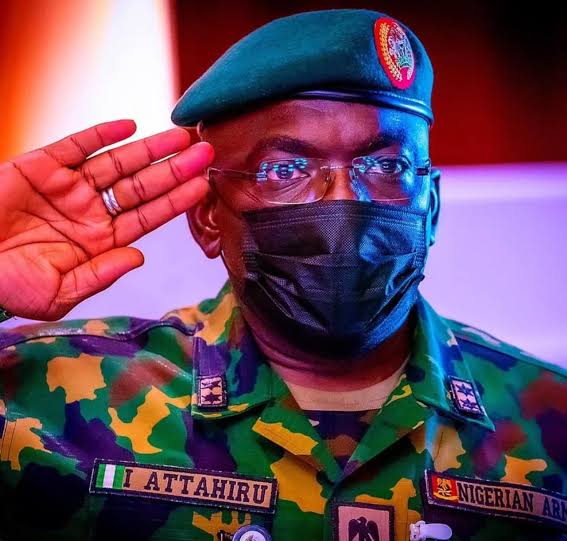
On May 21, 2021, Nigeria lost a soldier who understood that the measure of command lies not in the distance one keeps from danger, but in the proximity one maintains to responsibility. Lt. General Ibrahim Attahiru, the 21st Chief of Army Staff, perished in an air crash alongside ten officers and men while en route to Zaria for the passing-out parade of a new generation of recruits.
Five years have since passed, and the passage of time has done little to diminish the resonance of that moment. It remains a stark reminder that in the vocation of arms, the line between service and sacrifice is often indivisible.
Attahiru assumed leadership at a juncture when the Nigerian state confronted a constellation of internal threats that tested both its cohesion and its capacity. His response was not to retreat into the safety of abstraction, but to re-anchor military doctrine in the realities of the field.
He sought to restore operational tempo, to re-establish logistical coherence, and to rekindle the morale of an institution that had endured years of strain. His vision was unadorned by grandiloquence: a professional army, disciplined in conduct, precise in execution, and anchored in the constitutional mandate to protect the citizenry.
What distinguished his brief tenure was the fusion of intellectual rigor with personal example. He spoke of intelligence-led operations not as a slogan, but as a necessity for minimizing collateral cost and maximizing strategic effect.
He insisted that the legitimacy of force depended on its restraint, and that victory measured solely in territory was incomplete without the restoration of civil order and public confidence. In this, he articulated a conception of soldiering that acknowledged the political dimension of every tactical engagement.
Beyond doctrine, Attahiru’s conduct revealed a leader who regarded rank as a trust rather than a privilege. He was known to visit formations without ceremony, to listen to junior officers without condescension, and to hold senior commanders to standards he applied to himself. That he died while traveling to encourage recruits was not incidental; it was consistent with a life lived at the intersection of duty and presence.
The enduring tribute to Lt. General Attahiru cannot be confined to memorial addresses or ceremonial observances. It must be located in the institutional habits that outlive individuals. Has the Nigerian Army sustained the emphasis on professionalism, accountability, and civil-military rapport that he advanced? Has the state translated the lessons of his approach into policy that outlasts the tenure of any single commander?
Nations that endure are those that convert the sacrifice of their servants into enduring standards of conduct. Attahiru’s service, though abbreviated, offered such a standard: one in which leadership is measured by presence, strategy by coherence, and patriotism by consequence rather than proclamation.
Inna lillahi wa inna ilayhi raji’un.
It’s been 5 years since he passed, but he remains in our prayers. May Allah continue to have mercy on him, forgive his sins, widen his grave, and grant him Jannatul Firdaus. Ameen.
May his memory persist as both a rebuke to complacency and an invitation to a higher conception of duty. May his soul, and the souls of the officers and men who perished with him, find eternal rest and acceptance in the presence of their Lord. Let their sacrifice compel us to demand and build institutions worthy of the blood and service poured into the defense of this nation.
Signed;
~ Hon. Usman Bawa