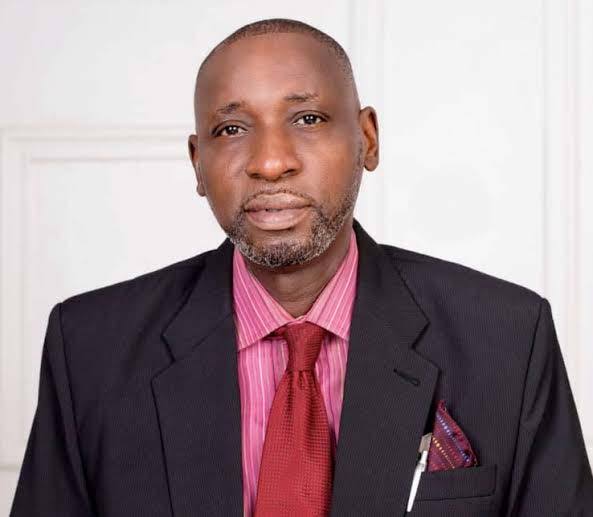
The Director-General (DG) of the National Institute for Policy and Strategic Studies (NIPSS), Prof. Ayo Omotayo, has revealed how the institute has been repositioned for national advancement under his administration.
Prof. Omotayo who spoke with newsmen during a media chat, explained that under the current leadership, NIPSS has not only solidified its position as Nigeria’s foremost policy institute but also worked towards establishing itself as Africa’s premier center for strategic thought and mentorship.
NIPSS, he said, has strengthened its policy advisory role by issuing rapid-response briefs to the Presidency and collaborating with industry stakeholders, including the Manufacturers Association of Nigeria, to shape manufacturing policies.
The DG further explained that the institute has submitted proposals for the mining sector and completed interventions in agriculture and the marine economy, including a fisheries framework endorsed by the Ministry of Marine and Agriculture.
“And to broaden access to policy education, NIPPS is establishing regional training centers, with the South-West center in Agowe operational and additional centers planned for Enugu, the South-South, and the North-East.
“Beyond policy and education, NIPSS is pursuing financial sustainability through profit-based courses, grants, and strategic partnerships. Corporate Social Responsibility initiatives include a sanitary-pad bags for schoolgirls, provision of technical textbooks, and the creation of day-tech schools that have improved student performance,” he said.
According to him, their newly launched policy team to boost governance, transparency and to strengthen security measures has also been instrumental, and that the initiative is designed to provide citizens with in-depth explanations of government policies and regulatory strategies, while fostering constructive discourse on national governance.
The DG stressed that collaboration has been a cornerstone of the their strategy, adding that recognizing the institute’s limitations in expertise and resources, partnerships were established with other Nigerian universities and research institutes to enhance capacity.
“We pushed for international collaborations as well. Knowledge does not start and end here. We cannot employ all the experts ourselves, but by linking with other institutions, we can achieve our agenda.We also addressed reforms in staff recognition and career progression.
“Looking ahead, we have an ambitious vision for NIPSS to become a leading African think tank. Plans are underway to deepen collaborations with universities and to bridge the gap between theoretical knowledge and practical solutions to Nigeria’s and Africa’s challenges.
“Universities often focus on theory, but solving real problems requires applying theory in practice. Our mission is to train the next generation to translate their research into actionable solutions that address local realities,” the DG said.
On advancing the staff capacity, he said since assuming leadership as Director-General of the institute he has confronted both expected and surprising challenges in reshaping the institution.
Prof Omotayo said he came believing that the administration at NIPSS was fully set up and that staff were well exposed—locally, nationally, and internationally, but quickly realized that there is exclusion and gaps in exposure among staff which was addressed.
With respect to the evolving security challenges in Nigeria, Omotayo noted that while past interventions have helped mitigate threats, recent attacks have exposed gaps in the nation’s security architecture, requiring new strategies.
The security environment, according to him, is constantly evolving, and criminals are always testing the system, and so they have been working closely with security experts and scholars to develop new solutions that can better protect communities, including during election periods when threats tend to escalate.
“Our key strategies include enhancing local intelligence, empowering communities to defend themselves, and leveraging technology and research to strengthen security measures.
“We have also been highlighting the potential role of retired security personnel and community-based platforms in safeguarding their neighborhoods.
“This is about creating a safer, more transparent Nigeria where citizens are informed and engaged,” he added